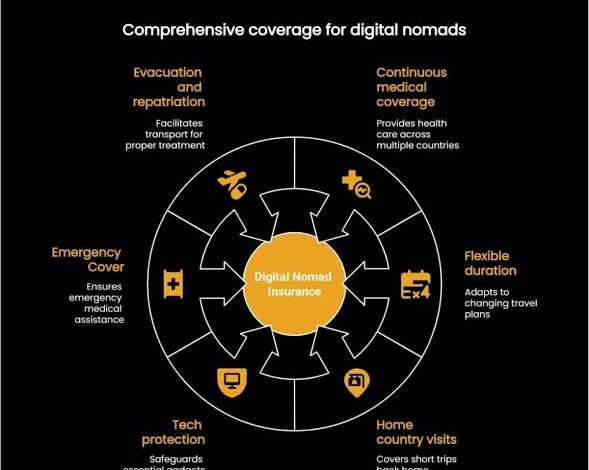
Does Nomad Travel Insurance Cover Pre-Existing Conditions?
Last updated: August 10, 2026
Does Nomad Travel Insurance Cover Pre-Existing Conditions?
- Most stability clauses require 90 days to 24 months of no new symptoms, no medication changes, and no hospitalizations.
- Routine or scheduled treatment for a pre-existing condition is excluded by virtually every nomad policy.
- A handful of nomad policies cover “acute onset” emergencies from a pre-existing condition; most do not cover gradual deterioration.
- SafetyWing, World Nomads, IMG Global, Cigna Global, and Allianz Care each use a different pre-existing condition structure — stability clause, declaration model, or blanket exclusion.
- International health insurance (not travel insurance) is the appropriate product for ongoing treatment needs.
- Comparison sites show benefit summaries, not policy terms — get the full Certificate of Insurance before deciding.
- Policies with more pre-existing condition flexibility typically cost 20–50% more than standard nomad plans.
This article is information, not financial or medical advice. Insurance terms and regulations vary by country and change frequently. Consult a qualified insurance adviser or broker before making a purchasing decision based on your specific situation.
Here’s the blunt version: nomad travel insurance pre-existing conditions coverage exists in maybe a third of policies — and nearly always with strings attached. The strings vary dramatically depending on which policy you buy, how long ago you were diagnosed, and whether your condition is stable. Generic answers will get you burned. What follows is how to read the actual terms. (For a detailed comparison of policy structures, see our nomad insurance comparison guide.)
What “Pre-Existing Condition” Means in Nomad Travel Insurance
Every insurer defines this phrase differently — and that definition is doing most of the heavy lifting in your policy.
The broadest definition — the one that catches most people off guard — goes something like: any condition for which you have ever received a diagnosis, prescription, or treatment. Under that reading, controlled high blood pressure from five years ago counts. So does a knee surgery you fully recovered from. Because policy language varies so widely, a specialist adviser can clarify how a specific policy’s definition applies to your situation. (NAIC consumer guidance on travel insurance explains how pre-existing condition definitions typically work.)
A narrower definition might read: any condition that was active or unstable in the 12 months prior to your policy start date. Under that version, a well-managed condition with no recent changes might not trigger the exclusion at all.
Worth knowing: the word “pre-existing” in the exclusion section applies to that policy’s specific definition, not a commonsense one. Skim past the definition section and go straight to the benefits table, and you may believe you’re covered when you aren’t. The gap between marketing summary and policy reality is where most claims disputes begin.
Quick check: Pull up any policy you’re considering, search for “pre-existing” or “prior condition,” and read every sentence in that clause — not just the headline. No full policy wording? You don’t have enough information yet.
What Nomad Travel Insurance Typically Covers for Pre-Existing Conditions
Designed for long-term travelers, digital nomads, and slow travelers, nomad travel insurance is a distinct product from single-trip holiday insurance. Nomad and expat policies differ significantly in how they handle ongoing health needs. A few patterns hold across this category, though specific terms vary by provider:
- Routine and preventive care for a pre-existing condition is almost universally excluded. A scheduled infusion for a condition you had before the policy started is typically not covered, regardless of where you are.
- Acute emergency treatment is where coverage varies most — and the difference can mean tens of thousands of dollars in a claim. Some nomad policies cover emergency treatment arising from a pre-existing condition: your managed condition suddenly destabilizes, you end up in an ER, and that visit may be covered per the policy terms. Not guaranteed — verify directly with the insurer’s underwriting team before relying on this. Other policies exclude any treatment connected to a known prior condition entirely. Either way, this depends on the specific policy wording.
- Stability clauses control whether you qualify at all. Most policies that offer any pre-existing coverage require the condition to have been “stable” — no new symptoms, no change in medication or dosage, no hospitalizations — for a defined lookback period, often 90 days to 24 months depending on the insurer.
Providers commonly mentioned in the nomad insurance space — SafetyWing (from ~$45/month), World Nomads, IMG Global, Cigna Global, Allianz Care — take meaningfully different approaches. Some providers let you declare conditions upfront for a potential premium increase of 10–30%; others issue flat exclusions; others use stability clauses. Comparing policy wording directly, rather than relying on marketing pages alone, is the most reliable way to understand where you actually stand — though a specialist broker can help identify key differences fast. (Insurance Information Institute overview of travel insurance categories.)
Quick check: Does the policy you’re looking at use a stability clause, a declaration model, or a blanket exclusion? These three structures lead to very different outcomes.
When Your Condition Is Stable and Well-Managed
A stable, well-managed condition — that’s your best shot at meaningful coverage, honestly. Still not a guarantee; the outcome still depends entirely on the specific policy and insurer.
Assuming your condition has been stable for the insurer’s defined lookback period, here’s the path to take:
- Get the full policy wording, not just the summary. Most insurers will provide this before purchase. Won’t share it? That tells you something.
- Locate the exact definition of “pre-existing condition” and “stable/stabilized.” Note the lookback period — 90 days, 6 months, 1 year, 2 years — and map it against your own treatment history.
- Check whether emergency treatment from a pre-existing condition is included or excluded. Look for language like “acute onset of a pre-existing condition” — some policies specifically cover acute emergencies even for declared conditions.
- Call or email the insurer’s underwriting team before buying. Ask directly: given condition X, last treatment date Y, current medications Z — what coverage applies? Get the answer in writing.
- Document your current treatment status. Keep a record of your last doctor’s visit, current medications, and any relevant test results. At claim time, the insurer will check whether you were in the declared stable state when the policy started.
- Consider a specialist broker who works with expats and nomads. Brokers in this niche often know which insurers are genuinely flexible about specific condition categories versus which ones advertise “coverage available” while excluding everything in the fine print.
Quick check: Has anything about your treatment changed — medication, dosage, frequency of visits — in the last 90 days? Changed recently? Many stability clauses will exclude you regardless of how controlled the condition feels day-to-day.
When Your Condition Is Active, Ongoing, or Recently Changed
Active or recently changed conditions are where the honest answer gets harder.
A medication change, a new diagnosis, a hospitalization, or increased treatment in the recent past — typically defined as anywhere from 90 days to two years depending on the insurer — and most standard nomad policies will exclude it outright, or exclude emergency treatment arising from it.
This doesn’t mean you’re uninsurable. Standard nomad insurance just may not be the right tool for your situation.
| Situation | Best Path | Why Other Options Often Fail |
|---|---|---|
| Active condition, recently changed treatment | Specialist expat health insurer with full medical underwriting | Standard nomad policies exclude by definition; travel add-ons don’t cover long-term conditions |
| Condition requiring scheduled ongoing treatment | International health insurance with declared condition | Nomad emergency-only policies won’t cover planned treatment by design |
| Stable condition, 12+ months unchanged | Nomad policy with stability clause that covers acute emergencies | Blanket-exclusion policies leave unnecessary gaps for stable conditions |
| Newly diagnosed, pre-departure | Delay travel until condition stabilizes OR purchase declared-condition coverage from an international health insurer | Most stability clauses reset the clock on diagnosis, not just treatment changes |
| Condition that’s in remission | Depends entirely on how the policy defines remission — requires direct underwriter clarification | Marketing language is often misleading here; only policy wording counts |
For active or recently changed conditions, international health insurance — rather than travel insurance — is often the more appropriate product. The two categories work differently: travel insurance handles unexpected emergencies during a defined trip; international health insurance is built for ongoing healthcare needs over an extended period abroad. A nomad who needs ongoing treatment is buying healthcare infrastructure, not emergency coverage. That distinction matters more than any policy feature comparison.
Quick check: Do you need coverage for ongoing treatment, or only for emergencies? That single question determines which product category you should be shopping in.
Edge Cases Where Normal Advice Breaks Down
Even when the framework above applies cleanly, several situations fall outside the standard logic.
1. Mental health conditions.
Many nomad policies that advertise pre-existing condition coverage either explicitly exclude mental health conditions or apply stricter stability definitions. Verify that mental health coverage is explicitly listed — not just implied by general coverage language. A few newer policies have improved here; many haven’t moved at all.
2. Conditions that are common in one country and unusual in another.
Traveling to a country where your condition is rare means treatment options may be limited regardless of your insurance status. Coverage for a condition doesn’t guarantee access to treatment. This isn’t an insurance problem — it’s a planning problem that no policy can fully solve.
3. Pregnancy as a pre-existing condition.
Some policies treat a pre-existing pregnancy the same way they treat any other pre-existing condition. Already pregnant when the policy starts? The pregnancy may be excluded entirely. Maternity coverage in nomad policies is rare and usually capped at $2,500–$10,000. Read the actual exclusions here before purchase — not optional.
4. Conditions first diagnosed abroad.
Get diagnosed with a condition during your policy period, and that condition is typically covered for that term. The pre-existing condition question hits at renewal or policy switch — at that point, the newly diagnosed condition may become a declared or excluded item going forward. Renewal terms matter as much as the initial purchase terms; most people don’t check until it’s too late.
5. The “acute onset” provision — and its limits.
Certain nomad policies, including versions of SafetyWing’s coverage, include language covering the “acute onset of a pre-existing condition” — a sudden, unexpected flare requiring emergency treatment. This sounds broader than it is. Insurers typically define “acute onset” narrowly: sudden, severe, unexpected, and not progressive. A condition that worsens gradually over days usually doesn’t qualify. The provision covers the dramatic emergency, not the slow deterioration.
6. Coverage gaps at renewal.
Renew a nomad policy after your health status has changed, and you may face new exclusions. Some policies allow continuous coverage with no new exclusions for conditions that arose during the covered period; others reassess at each renewal. Understanding renewal terms before you first buy is the step most people skip — and it can be expensive to discover later.
How to Compare Nomad Insurance Policies on Pre-Existing Conditions
Comparison sites are useful for price but often inadequate for pre-existing condition detail. Benefit tables that comparison engines display are summaries — not policy terms. That gap is where most coverage assumptions fall apart.
To compare meaningfully:
- Get the full Certificate of Insurance or Policy Wording document from each provider — not the marketing brochure.
- Search for “pre-existing,” “prior condition,” “stability,” and “exclusion” within that document.
- Write down, for each policy: the definition used, the lookback period, whether acute emergencies are covered, and whether declaration is an option.
- Contact each insurer’s underwriting team with your specific condition and ask whether it would be covered under their stability clause or require exclusion. Document the response.
- Factor in the claims process, not just coverage terms. A policy that covers your condition but requires pre-authorization from abroad — or disputes claims routinely — is worth less than its coverage terms suggest. Forums and communities like Nomad List, expat Facebook groups, and r/digitalnomad carry genuine claims experience that marketing materials never will.
The honest trade-off: policies offering more pre-existing condition flexibility tend to cost 20–50% more, require more documentation, or both. A policy that’s cheap and easy to buy with no medical questions is almost certainly not providing meaningful coverage for a known condition. That math stops working fast when you actually need to file a claim.
The One Thing Most Articles Leave Out
Most comparisons treat pre-existing condition coverage as a binary — either covered or not. Reality is messier: most policies that offer any pre-existing condition coverage are covering a narrow slice of possible healthcare needs — emergency stabilization, not ongoing management.
A condition that could produce an unplanned ER visit? Nomad policies can provide real value there. But a condition requiring scheduled ongoing treatment is a different animal entirely; most nomad policies — even those marketed as covering pre-existing conditions — weren’t designed for that use case and won’t perform like they were.
Knowing which category your situation falls into is more useful than any specific policy recommendation. The right product for ongoing treatment needs is usually not travel insurance at all. It’s international health insurance — a different product with different structure, different pricing, and different underwriting. The two categories overlap in marketing language. They do not overlap in what they actually pay for.