How Do Travel Insurance Claims Work for Digital Nomads?
Last updated: August 10, 2026
This article explains how travel insurance claims work in practice for digital nomads. It is not financial or legal advice, and the right policy for your situation depends on factors no general article can assess. Consult a qualified insurance broker or adviser for your own circumstances.
- Standard annual multi-trip policies typically cap each trip at 30–90 days; many nomads unknowingly breach this limit.
- Not calling the insurer’s emergency line before non-emergency treatment is the second most common reason medical claims are partially or fully denied.
- Most policies require claim notification within 30–60 days of the incident — some start the clock from treatment date, others from your return home.
- Motorcycle and rental scooter accidents are excluded by a large proportion of standard travel policies.
- Nomad-specific policies (e.g., from SafetyWing, World Nomads, or Genki) are built around citizenship rather than residency and generally handle long-stay claims more cleanly than standard annual policies.
- Medical evacuation benefits — often worth $100,000–$500,000 — are voided if you arrange your own transport without involving the insurer’s assistance team.
- Partial payment on a first response is common and is not a final decision; supply the missing documentation and follow up in writing.
A five-figure hospital bill in a country where you can’t access public healthcare on a tourist’s income — that’s the gap nobody tells you about when you buy travel insurance as a digital nomad. Standard policies were built for someone who flies out on a Friday, spends two weeks somewhere warm, and flies home with a return ticket and a fixed end date. A nomad has none of those things. The mismatch between what the policy assumes and how a nomad actually lives is exactly where claims get denied — not because the policyholder did anything wrong, but because the policy was never designed for them.
Who This Applies To — and Who Should See a Professional Instead
This guide is for people who work remotely while moving across multiple countries, staying in each place between a few weeks and several months, and want to understand how to file a travel insurance claim correctly — or how to avoid the traps that cause claims to fail.
Assume you already have some form of coverage. Still choosing a policy? The mechanics here should inform that choice, but you’ll also need a broker or a comparison tool built specifically for long-term, multi-country travel. (See the Alternatives and Comparisons section below for the main options.)
Speak to a professional rather than rely on this article if any of the following apply to you:
- You have a pre-existing condition that required disclosure at purchase. How that condition interacts with any claim — even an unrelated one — varies by insurer and jurisdiction in ways a general guide cannot safely map.
- You earn income in more than one country, which can create tax residency questions that affect what “home” means under your policy.
- Your work involves activities the insurer classifies as high-risk — diving instruction, construction, or journalism in conflict zones, for example. Many policies carry occupation exclusions buried in the fine print.
- Your claim has already been partially denied and you are considering a dispute. At that point you need someone who can read the specific policy wording, not general guidance.
What Your Policy Actually Covers — and the Nomad-Specific Gaps
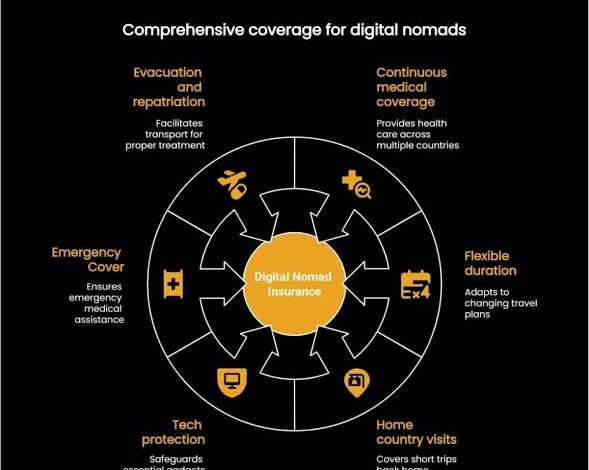
Know what kind of policy you’re holding before you try to file anything. Three types matter most here: standard annual multi-trip policies, nomad-specific long-stay policies (offered by specialist insurers such as SafetyWing, World Nomads, and Genki), and expat health insurance.
Annual multi-trip policies cap each trip at a fixed number of days — commonly 30–90, though this differs from one insurer to the next and by country of purchase, so check your own policy schedule. Four months in Lisbon without a return to your home country? You may not be on a “trip” in any sense the policy recognizes. This is the single most common reason nomad claims get rejected, and it’s rarely flagged at purchase. The math stops working fast once you cross that day limit.
Nomad-specific policies are built around continuous travel. They define eligibility by country of citizenship rather than residence and price around the assumption that you’ll be abroad for most of the year. Claims under these policies tend to be more straightforward — but they cost more, often 20–40% above comparable standard annual policies, and they vary significantly in what they exclude.
Expat health insurance, designed for people settled long-term in a foreign country, is worth knowing about. Certain long-term nomads quietly cross into territory where expat coverage would serve them better than travel insurance — but that’s a call that requires professional input, not a forum thread.
So: before any claim, pull out your policy schedule and confirm that the date you’re filing still falls within a covered period. Sounds obvious. Plenty of people don’t check until they’re already in a medical emergency, at which point it’s too late to act on the answer.
The Step-by-Step Process for Filing a Travel Insurance Claim Correctly
The steps below reflect common industry practice. Policy terms vary, and you should follow your own insurer’s documented process. Consult a qualified insurance adviser or claims advocate if your situation is complex. For a general overview of how travel insurance claims work, the National Association of Insurance Commissioners (NAIC) consumer guidance on travel insurance{rel=”nofollow noopener”} is a useful starting point.
-
Call the insurer’s emergency assistance line before treatment — not after. Almost every policy requires this for anything beyond minor outpatient care. That number is on your insurance card and in your policy documents; save it in your phone before you ever need it. Failing to call ahead is the second most cited reason for partial or full denial of medical claims. Genuine life-threatening emergency? Call local emergency services first, then ring the insurer from the hospital.
-
Confirm coverage verbally and record the reference number. Once you reach the assistance line, give them your policy number, your location, your nationality, and the nature of the problem. Ask them to confirm whether the treatment you need is covered — note that verbal confirmations aren’t always binding, so request written confirmation where possible, and check with your broker if you get conflicting information. Write down the agent’s name, the time, and the reference number. That creates a contemporaneous record that you followed their process.
-
Gather documentation while still at the facility, not afterward. Collect itemized receipts for every payment — not a total, a line-by-line breakdown. Get a signed diagnosis letter from the treating physician, in English where possible (many hospitals near tourist areas offer this; ask at the desk, though availability varies by country and facility). Paying out of pocket because the insurer has no direct billing arrangement with that facility? Keep every receipt and payment confirmation. Photograph prescriptions and medication packaging. Write down the date, the facility name, and the treating doctor’s name before you walk out. For guidance on what documentation insurers typically require, the Insurance Information Institute’s claims guidance{rel=”nofollow noopener”} provides a useful general reference.
-
File within the deadline stated in the policy. Most policies require claim notification within 30–60 days of the incident. The clock starts from the date of treatment under some policies; others start it from the date you return to your home country. Read the wording carefully, because “home country” for a full-time nomad may be genuinely ambiguous. When in doubt, file early.
-
Complete the claim form precisely, matching the policy’s own wording. Insurers match what you write against the policy definitions. Describing your claim as “a check-up that turned into surgery” when the policy covers “emergency medical treatment” introduces ambiguity you didn’t need to create. Use the same terminology the policy uses.
-
Submit supporting documents in the format the insurer specifies. Insurers sometimes require originals by post; many now accept scanned PDFs via a claims portal. Keep copies of everything you send. Posting originals? Use tracked mail. Digital submissions get a timestamped confirmation — keep it.
-
Follow up in writing at the interval the policy states. The insurer promises a decision within 28 days and day 29 arrives without contact — send a written follow-up referencing your claim number and the stated decision period. This builds a paper trail if escalation becomes necessary.
-
Request the full written reason before reacting to any adverse decision. Insurers are generally required to provide a written explanation of any denial. A denial isn’t always final — but you need the specific reasoning before you know which kind you’re facing.
Critical Checkpoints: What to Verify Before Moving Forward

Check your trip duration against the policy limit. Pull out the policy schedule and count the actual days since you last returned to your declared home country. Close to or past the limit, your current location may not be covered at all.
Verify the policy is still active. Nomads often pay insurance by card on auto-renew. Card changes, expiry dates, and failed payments create coverage gaps that only surface when you need to file. Log into the insurer’s portal and confirm the policy is current.
Confirm the country you’re in isn’t excluded. Policies exclude countries under government “do not travel” advisories. These change. An updated advisory issued after you arrived can still trigger an exclusion — check whether your insurer treats that scenario as grounds to deny.
Know whether your activity is covered. Motorcycle accidents are excluded by a large proportion of standard travel policies — rental scooters often included. Extreme sports, alcohol-related incidents, and certain adventure activities carry similar carve-outs. This isn’t a moral judgment; it’s simply a question of whether the policy wording covers the specific cause of your claim.
Warning Signs: When to Stop and Get Help
The insurer’s response references “residency” or “domicile” questions. This means the insurer may be challenging whether you even qualify as a traveler under your policy. Don’t respond informally — get a broker or legal adviser to review the correspondence before you reply.
The denial cites a pre-existing condition you didn’t disclose. Material misrepresentation can void the entire policy, not just the specific claim. Seek professional advice immediately.
The claim involves an amount large enough to hurt you financially. Hospitalization, evacuation, or extended care above a threshold that would genuinely destabilize your finances warrants at least a consultation with a claims advocate or insurance lawyer rather than DIY correspondence.
You’re being asked to sign documents you don’t understand. Insurers sometimes request medical record releases or statements that go well beyond what the claim requires. Don’t sign anything you haven’t read fully, and seek advice if the document seems to exceed what the claim actually calls for.
The insurer has missed the response deadline stated in the policy. In many jurisdictions, regulatory response deadlines apply. Note the missed deadline in your follow-up and consider a regulatory complaint if the delay drags on.
The Most Common Mistakes — and Their Real Consequences
Assuming the policy covers everything because it says “travel insurance.” The consequence: a claim denied for a trip-length breach or activity exclusion the policyholder never read. Read the exclusions section before you travel, not before you claim.
Treating the emergency line as optional. Many policies require prior authorization for non-emergency hospital admission. Paying out of pocket and expecting full reimbursement — because you never called — often ends in partial payment or outright denial. Call first. Always.
Not requesting itemized documentation. A single receipt showing a lump sum is often insufficient. Insurers need line-by-line breakdowns to pay specific items. Ask for an itemized receipt while you’re still in the room, before you leave the facility.
Tied to that documentation gap is another common error: filing under the wrong benefit category. A laptop stolen from your accommodation might fall under “personal property” or “theft” — but if you were using it for work at the time, certain policies classify it as business equipment and exclude it entirely. Read the definitions and file under the category that actually fits.
Waiting too long to file because the situation felt uncertain. A preliminary claim notification costs nothing and preserves your rights. Missing the deadline while you wait for certainty costs you everything.
Edge Cases and Modified Approaches
The “home country” problem for stateless nomads. A handful of nomads have genuinely severed ties with their country of citizenship — no address, no tax residency, no regular returns home. A handful of insurers will still cover you on citizenship alone, but claims can get complicated fast if the insurer needs to verify that your trip originated in your home country. Document your country of citizenship clearly in the application, and confirm in writing how the insurer defines your point of origin before you purchase.
Beyond the residency question sits a related issue around occupation. Certain policies permit “incidental” remote work — checking emails, taking calls — while explicitly excluding people whose primary occupation is location-independent. The distinction matters enormously at claim time; an insurer can argue your occupation invalidates coverage if you’re effectively living and working abroad full-time. Nomad-specific policies resolve this by building it into the product design from the start.
Layered on top of that, the country where you’re located affects benefit terms too. Fell ill in one country, received partial treatment, then traveled to another country for further care? Document the connection between both episodes explicitly. Two events that look separate — one potentially outside a covered period — may need to be presented as a single ongoing claim. Get that framing right before you file.
Medical evacuation claims. Evacuation benefits rank among the highest-value items in a travel policy — often $100,000–$500,000 — and they’re among the most tightly managed. The insurer’s assistance team arranges the evacuation; you don’t. Book your own transport home during a medical crisis and you may find the policy won’t reimburse it, on the grounds that their team wasn’t involved. Call before you book anything.
Alternatives and Comparisons: Which Policy Type Is Right for Nomads? {#alternatives}
Understanding how claims work matters most when you’ve chosen the right policy to begin with. Three main options for nomads sit on a spectrum from cheapest-and-most-restrictive to most-comprehensive-and-expensive.
Standard annual multi-trip policies (e.g., from mainstream providers like Allianz, AXA, or your bank’s travel card) cost roughly £50–£200/year for a UK or EU resident. They cap trips at 30–90 days, though, and weren’t designed for continuous travel. Nomads who do return home regularly can make them work — but that trip-length cap is a hard limit, and it causes most nomad claim failures.
Nomad-specific travel policies — SafetyWing Nomad Insurance (from ~$56.28/month for under-40s), World Nomads, Genki Explorer, and similar products — are purpose-built for continuous travel. Coverage is defined by citizenship, not residency; per-trip day caps don’t apply. The trade-off: home-country coverage is excluded or costs extra, and certain adventure activities are carved out. Claims under these policies are generally more straightforward for nomads than under comparable annual multi-trip plans — provided you read the exclusion list carefully before you buy.
Expat health insurance (e.g., Cigna Global, AXA International, Allianz Care) delivers the most comprehensive coverage — annual premiums can run $1,500–$5,000+ depending on age and coverage level — and is designed for people settled long-term abroad. Unlike travel policies, expat plans cover routine and preventive care, not just emergencies. Worth considering if you spend more than eight to ten months per year outside your home country; honestly, the transition from travel to expat coverage involves underwriting questions that warrant professional advice.
Specifically for claims: nomad-specific policies tend to generate fewer disputes over trip duration and occupation; standard annual policies generate more; expat plans produce the fewest for people who genuinely qualify as long-term residents abroad. Choose the category that matches how you actually live — not how the marketing copy describes it.
What to Expect: Realistic Timeline and Outcomes
Straightforward outpatient claims with complete documentation — a doctor’s visit, a short course of medication, receipts in order — are typically processed within two to four weeks, though turnaround time shifts with claim volume and the complexity of the provider’s review process.
Complex claims are a different story. Hospitalization, evacuation, or anything the insurer needs to investigate: two to six months is not unusual. Plan accordingly.
Partial payment is common and doesn’t necessarily indicate bad faith. Insurers often pay what’s clearly covered while querying items that need more documentation. Treat a partial payment as a prompt to provide that documentation — not as a final answer.
Expect to be asked for more paperwork than you initially submitted. Build this into your preparation; keep every piece of paper associated with a medical event, even the ones that seem minor at the time.
The honest trade-off of nomad travel insurance is this: policies built for your lifestyle cost more than standard annual policies, the claims process demands more documentation because your situation is less standard, and outcomes depend significantly on how closely your actual travel matched the policy’s definitions from the start. That’s not an argument against getting coverage — a genuine medical emergency with no coverage is far worse. It’s an argument for reading the policy you’re buying, not the marketing summary on the comparison site.