Safetywing Vs World Nomads: Which Is Better For Digital Nomads?
Last updated: August 10, 2026
- World Nomads covers 200+ adventure activities on its Explorer plan; SafetyWing’s base plan covers far fewer by default.
- Per-day cost tends to run 30–50% higher than SafetyWing over equivalent periods.
- World Nomads typically runs $80–$150/month for a comparable trip and is better for defined trips involving adventure sports.
- SafetyWing covers up to 30 days at home per policy year (check current terms); World Nomads terms vary by plan.
This article is information, not financial or insurance advice. Coverage terms, prices, and eligibility rules vary by your country of residence, destination, and individual circumstances — and they change. Before purchasing any policy, read the policy wording carefully and consult a qualified adviser if you’re uncertain what’s right for your situation.
Quick Answer: SafetyWing vs World Nomads for Digital Nomads
SafetyWing Nomad Insurance costs roughly $45–$75/month (depending on age and home country) and suits full-time nomads with no fixed return date. World Nomads typically runs $80–$150/month for a comparable trip and is better for defined trips involving adventure sports. Neither covers pre-existing conditions in most cases. For a healthy nomad on a tight budget traveling continuously, SafetyWing wins on price and flexibility. For a three-month trip with scuba diving or trekking, World Nomads wins on activity coverage and medical limits.
Key Facts
-
SafetyWing Nomad Insurance is a monthly rolling subscription; World Nomads issues fixed-date trip policies.
-
SafetyWing’s base emergency medical limit is approximately $250,000; World Nomads’ Explorer plan goes up to $100,000–$5,000,000 depending on plan and region — verify current figures before purchasing.
-
World Nomads covers 200+ adventure activities on its Explorer plan; SafetyWing’s base plan covers far fewer by default.
-
Both products exclude pre-existing conditions in most standard configurations.
-
SafetyWing allows you to buy anytime, including after departure; World Nomads requires purchase before or at trip start.
-
Neither product is a substitute for local health insurance if you are a registered resident in a country for more than 12 months.
-
SafetyWing covers up to 30 days at home per policy year (check current terms); World Nomads terms vary by plan.
Years of covering nomad finances and talking to people whose claims paid out — and to those whose didn’t — puts the SafetyWing vs World Nomads question in a different light than most comparison posts. The real question isn’t “which is cheaper?” It’s narrower and harder: which one actually pays out when something goes wrong in a country where you don’t speak the language and aren’t sure you’re even covered?
That’s the only question worth answering carefully. Eligibility rules — what your policy covers based on residency, destination, and personal circumstances — shape everything downstream, including whether a claim gets honored at all. Once you grasp that, everything else (the prices, the dashboards, the brand vibes) is secondary.
The short answer: SafetyWing is generally the better fit for long-term nomads who move continuously and want low-friction, ongoing coverage. World Nomads tends to suit people taking defined trips, especially those doing higher-risk activities who want more generous emergency limits. But the gap between them matters a lot depending on how you travel — and there are situations where neither is the right call.
The Real Difference Between SafetyWing and World Nomads for Digital Nomads
These two products are not competing for the same traveler. SafetyWing’s flagship product (Nomad Insurance) is structured as a subscription — you pay monthly, it renews automatically, and no fixed end date is required. World Nomads issues policies with defined start and end dates, more like traditional travel insurance.
That structural difference shapes everything else. Because of it, the two products attract different types of nomads, suit different trip shapes, and fail in different ways.
SafetyWing’s subscription model means you can run a single rolling policy for years. No renewal deadline before each new country. No gap in coverage because you miscalculated a layover. Someone who has been on the road for 14 months with no set return date finds that continuous structure removes a genuine logistical headache — the kind that trips people up at the worst possible moment.
World Nomads requires trip dates. You can extend mid-trip — a real feature that matters — but the framework stays trip-based throughout. Leaving home in March with no return date in mind makes that framing slightly awkward; you end up estimating, then adjusting, which isn’t catastrophic but is friction a subscription sidesteps. On the other hand, that same structure works cleanly when your itinerary has a defined shape: three months in Southeast Asia ending with a flight home.
The second structural difference concerns what each product covers by default. World Nomads has historically included a more substantial list of adventure and sports activities in its standard coverage — specifically, the Explorer plan lists 200+ covered activities, including scuba diving, mountaineering, and motorbike riding, though the list has changed over time. SafetyWing’s base product is oriented toward medical emergencies and evacuation rather than activity-specific risk. That gap is most visible when you’re planning to paraglide, trek at altitude, or dive regularly.
SafetyWing: Who Should Actually Use This (and Who Shouldn’t)
SafetyWing wins for the traveler who has already stopped thinking in trips. No return flight booked, no fixed itinerary, moving between countries in a loosely improvised way — the subscription structure fits that life. You don’t have to keep explaining your travel plans to an insurance form.
Pricing is designed to be accessible. As of 2024, SafetyWing’s Nomad Insurance runs approximately $45/month for travelers under 40 from most home countries, rising to around $70–$80/month for ages 40–49. Prices vary by home country and change periodically, so verify current rates at safetywing.com before purchasing. That monthly cost is low enough that many nomads keep it running even during slow periods when they’re not traveling heavily.
Real strengths: continuous coverage with no trip end date, simple enrollment available after departure, reasonable emergency medical and evacuation cover up to approximately $250,000, and coverage that includes brief visits home — typically up to 30 days per policy year, though current terms should be confirmed directly.
Real weaknesses, stated plainly: emergency medical limits are lower than several competitor products. Managing a serious chronic condition means the policy is unlikely to cover related treatment — pre-existing conditions are typically excluded, and the definition of what qualifies can be narrow. Before purchasing, review SafetyWing’s current policy wording directly and, if you have any ongoing health conditions, consult a qualified insurance adviser to understand exactly what is and isn’t covered. Trip cancellation, lost luggage, and travel disruption coverage are also thinner than World Nomads offers. Honestly, if your laptop is your income and solid gear coverage matters to you, SafetyWing’s base product isn’t built around that need.
Skip it entirely if you’re traveling for a defined two-week holiday, regularly doing high-risk adventure activities, or your primary concern is protecting expensive equipment or trip cancellation losses from non-medical causes.
World Nomads: The Specific Situations Where It Wins
Three months in Southeast Asia — scuba diving, motorbike rental, a few days of trekking, return flight booked. That’s the use case World Nomads was designed around; trips with edges.
Activity coverage is the headline differentiator. Out of the box, World Nomads covers a wider range of adventure activities than most comparable products. The Explorer plan lists 200+ activities; the Standard plan covers fewer and at lower limits. Anything involving meaningful physical risk warrants checking the current covered activities list directly at worldnomads.com — lists change, and relying on secondhand information is how claims get denied.
Emergency medical limits are higher, too. The Explorer plan can reach $5,000,000 in some regions, compared to SafetyWing’s approximately $250,000 cap — a difference that stops being academic if you need an airlift or an ICU stay. For gear, World Nomads offers per-item limits and overall theft/loss cover that actually matters when you’re carrying a camera, drone, or high-end laptop. Again, verify current figures in the policy documents.
Real weaknesses: the trip-based structure is genuinely inconvenient for long-term nomads. Per-day cost tends to run 30–50% higher than SafetyWing over equivalent periods. There have also been consistent reports from travelers — discussed at length on communities including r/digitalnomad and nomad-focused forums over several years — that claims processes can be slow and require substantial documentation. Not unique to World Nomads among travel insurers, but worth factoring in.
Skip it if you’ve been traveling continuously for more than six months with no set return, or if keeping monthly costs low matters more than comprehensive activity and gear coverage.
The Honest Side-by-Side
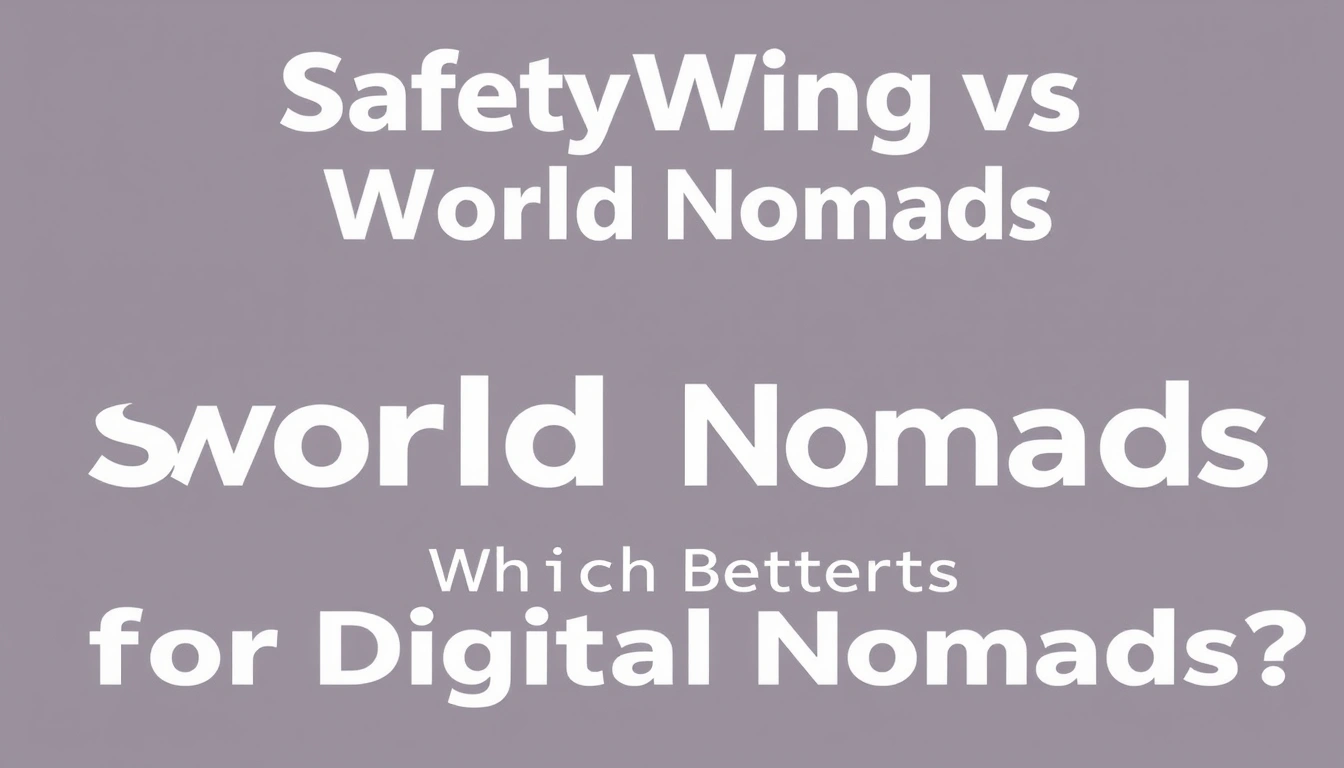
CriteriaSafetyWingWorld NomadsWinner for…
Coverage structureRolling monthly subscriptionDefined trip datesContinuous nomads → SafetyWing
Adventure activity coverLimited by default200+ activities (Explorer)High-risk activities → World Nomads
Emergency medical limits~$250,000Up to $5,000,000 (Explorer)Serious medical risk → World Nomads
Price (relative)~$45–$80/month~$80–$150/monthBudget-conscious nomads → SafetyWing
Gear/electronics coverageThinMore substantial, per-item limitsEquipment-heavy travelers → World Nomads
Trip cancellation coverBasicMore developedPre-booked trips → World Nomads
Enrollment flexibilityBuy anytime, including after departureMust set dates upfrontUnplanned travel → SafetyWing
Home country visitsUp to 30 days/year (verify current terms)Check policy termsTie — verify current terms for both
Pre-existing conditionsGenerally excludedGenerally excludedNeither — both have restrictions
One row that often gets missed: pre-existing conditions. Both products exclude them, or cover them only under specific and narrow conditions. A chronic health condition makes the fine print on both policies the most important thing you’ll read before purchasing — and getting advice from a licensed insurance professional is worth the time. According to the National Association of Insurance Commissioners (NAIC), pre-existing condition exclusions in travel insurance policies are among the most common reasons claims are denied, and the definitions vary significantly between insurers.
My Verdict: Which One to Choose and Why
Choose SafetyWing when you’re in continuous travel mode, no return date exists, your budget is tight, and your main need is emergency medical coverage that follows you from country to country without administrative hassle.
Choose World Nomads when you’re taking a defined trip of weeks to a few months, adventure sports or physically demanding activities are on the agenda, and higher medical limits plus substantive gear protection matter to you.
Choose neither if you have significant pre-existing health conditions — the exclusions on both sides could leave you exposed for the very reason you’d most likely need coverage. Also reconsider if you’re a US resident traveling domestically, since neither product is built for that. And if your income or assets have grown to the point where the coverage limits on either policy feel inadequate for the risk you’re carrying, specialist expatriate health insurance or commercial travel policies deserve a serious look.
When to Reconsider This Choice Entirely
You have a serious pre-existing condition. The exclusions on both products could render a policy effectively useless for the most likely reason you’d need it. Specialist expat health insurance — which underwrites pre-existing conditions differently, sometimes with exclusion periods rather than blanket denials — deserves serious consideration. This is the clearest case for getting professional advice rather than relying on comparison articles.
You’re employed remotely by a company. Some remote employers include travel health coverage or medical evacuation benefits. Check what you already have; buying a second policy may be redundant. Spending money on coverage you don’t need is a frustrating way to find out.
You’ve settled into one country for more than a year. A fixed address and most of your time spent there may mean eligibility for local health insurance — or even a legal obligation to hold it. Travel insurance is not a permanent substitute for a proper health plan, and some countries explicitly require registered residents to carry local coverage.
Your gear value is very high. Carrying equipment worth tens of thousands of dollars — broadcast cameras, high-end computing setups, specialized instruments — puts you well outside what standard travel insurance gear limits can handle. Specialist equipment insurance, or a commercial policy with a scheduled items rider, is a different product category entirely.
What Both Products Get Wrong About Long-Term Nomads
Neither SafetyWing nor World Nomads was truly built for the genuinely complicated situation many long-term nomads are in: no clear tax residency, income from multiple countries, more than 183 days per year outside any single country, and movement between destinations with very different healthcare quality and cost. That’s not a fringe edge case — it describes a large share of full-time nomads, as reflected in ongoing surveys by communities like Nomad List, which has tracked nomad demographics since 2014.
Both products assume a tidier version of nomad life than most nomads actually live.
The coverage gaps that matter most aren’t addressed in either company’s marketing: what happens when ongoing treatment is needed for something diagnosed mid-policy; what happens when your home country residency status becomes ambiguous; what happens when a hospital demands full payment upfront and reimbursement takes three months. These scenarios carry serious consequences — so if your situation touches any of them, consult a licensed insurance professional before committing to either product. The Insurance Information Institute (iii.org) maintains accessible guides on travel insurance exclusions and claims processes that are a useful starting point for understanding your rights as a policyholder.
Reading the policy wording rather than the marketing page is, without exaggeration, the most useful thing you can do before committing to either product. The marketing shows the favorable scenario. The policy wording describes what actually happens when something goes wrong.